Peptide Storage Mistakes That Destroy Research Potency
Why Storage Mistakes Destroy Peptide Research
Every peptide researcher has experienced it: a compound that worked reliably for weeks suddenly produces inconsistent or absent results. The vial looks fine. The reconstitution was standard. The protocol hasn’t changed. But the peptide storage conditions failed at some point between purchase and use, and the compound degraded silently. This article covers the most common storage mistakes, the chemistry behind why they matter, and the practical steps that prevent potency loss.
Peptides are inherently less stable than small-molecule compounds. Their biological activity depends on maintaining a specific three-dimensional structure — held together by hydrogen bonds, disulfide bridges, and hydrophobic interactions that are all sensitive to temperature, light, moisture, and pH. Disrupting any of these forces can unfold, fragment, or chemically modify the peptide, reducing or eliminating its research utility.
Mistake #1: Leaving Reconstituted Peptides at Room Temperature
This is the most common and most destructive storage error. Lyophilized (freeze-dried) peptides are remarkably stable — properly stored, they can maintain potency for months to years. But the moment you add bacteriostatic water and create a solution, the stability clock starts ticking dramatically faster.
In solution, peptides are exposed to hydrolysis (water molecules attacking peptide bonds), oxidation (particularly at methionine, cysteine, and tryptophan residues), and deamidation (asparagine and glutamine converting to aspartate and glutamate). All three reactions accelerate with temperature. At room temperature (20-25°C), most reconstituted peptides lose measurable potency within days. At refrigeration temperature (2-8°C), degradation slows by approximately 10-fold, extending usable life to 20-30 days for most compounds.
The practical rule: reconstitute only what you will use within 30 days, refrigerate immediately after reconstitution, and never leave a reconstituted vial on the bench “just for a few hours.” A few hours at room temperature may not destroy a peptide, but cumulative exposure across multiple bench sessions adds up. Vendors like PSPeptides publish detailed storage guides covering temperature requirements for specific compounds, which is helpful because degradation rates vary significantly between peptides (PubMed: Peptide stability research).
Mistake #2: Exposing Peptides to Light
Photodegradation is the second-most underestimated storage hazard. Several amino acids are photosensitive — tryptophan, tyrosine, phenylalanine, histidine, and cysteine all absorb UV light and can undergo photochemical reactions that alter their structure. Peptides containing these residues (which includes most research peptides) degrade when exposed to ambient light over time.
The damage mechanism involves free radical generation. UV photons absorbed by aromatic amino acids generate reactive oxygen species that attack nearby residues, causing crosslinking, fragmentation, and oxidation. The effects are cumulative and irreversible — once a peptide is photodamaged, no storage correction can restore its original structure.
The solution is straightforward: store peptides in amber vials or wrapped in aluminum foil, keep them in a dark refrigerator (not a glass-doored display fridge), and minimize the time vials spend exposed to room lighting during handling. If your reconstitution and dosing workflow involves leaving vials on a lit bench for extended periods, that workflow needs redesigning.
Mistake #3: Repeated Freeze-Thaw Cycles
Researchers sometimes freeze reconstituted peptides thinking this will extend shelf life. While freezing does slow chemical degradation, the physical stress of freeze-thaw cycles introduces a different class of damage.
When a peptide solution freezes, ice crystal formation can physically disrupt the peptide’s three-dimensional structure. The concentration of solutes in the remaining liquid phase increases dramatically as water freezes out, potentially forcing the peptide to aggregate, adsorb to the vial surface, or precipitate. Each thaw-and-refreeze cycle repeats this stress, and the cumulative effect can reduce potency substantially even though the chemical sequence remains intact — the peptide is chemically present but structurally damaged.
If you must freeze reconstituted peptides, aliquot into single-use portions before freezing. This way each aliquot is frozen once and thawed once, eliminating the cumulative damage of repeated cycles. Use small-volume tubes that minimize headspace (air exposure) and label each aliquot with the freeze date.
Mistake #4: Using the Wrong Reconstitution Solvent
Bacteriostatic water (water with 0.9% benzyl alcohol preservative) is the standard reconstitution solvent for most research peptides, and it’s the standard for a reason — the benzyl alcohol provides antimicrobial protection that sterile water lacks, extending the usable life of multi-dose vials by preventing bacterial growth.
The mistake occurs when researchers substitute sterile water, saline, or other solvents without understanding the consequences. Sterile water lacks preservative, meaning every needle entry into the vial introduces potential contamination without antimicrobial protection. Within days, bacterial contamination can compromise the solution — and unlike peptide degradation, bacterial contamination is invisible until it’s severe enough to cause turbidity.
Some peptides have specific solvent requirements. Peptides with limited aqueous solubility may require dilute acetic acid or DMSO for initial dissolution before dilution with bacteriostatic water. Using the wrong solvent for these compounds results in incomplete dissolution — visible as cloudiness or particulates — and inconsistent dosing because the peptide concentration in the drawn solution doesn’t match the calculated concentration based on total vial contents. The PSPeptides reconstitution guide covers compound-specific solvent recommendations that account for these solubility differences.
Mistake #5: Ignoring Vial Headspace and Air Exposure
Oxygen in the headspace above a reconstituted peptide solution drives oxidative degradation. Every time a vial is opened or a needle punctures the septum, air enters the headspace. Methionine residues oxidize to methionine sulfoxide. Cysteine residues form disulfide bonds or sulfenic acids. Tryptophan undergoes oxidative ring opening. All of these reactions reduce biological activity.
Lyophilized peptides ship under vacuum or inert gas (nitrogen) specifically to prevent oxidative degradation during storage. Reconstitution replaces this protective atmosphere with air-saturated water, and repeated needle entries compound the oxygen exposure.
Minimizing headspace helps. When reconstituting, add only enough solvent to create your target concentration — don’t over-dilute, which increases both headspace and the surface area of solution exposed to air. Some researchers flush vials with nitrogen after reconstitution, though this is more common in pharmaceutical manufacturing than in research settings.
How to Tell If a Peptide Has Degraded
Some degradation is visible. Cloudiness, particulate matter, color change (most peptide solutions should be clear and colorless), or unusual odor all indicate compromise. Any of these signs warrants discarding the vial rather than attempting to use the contents.
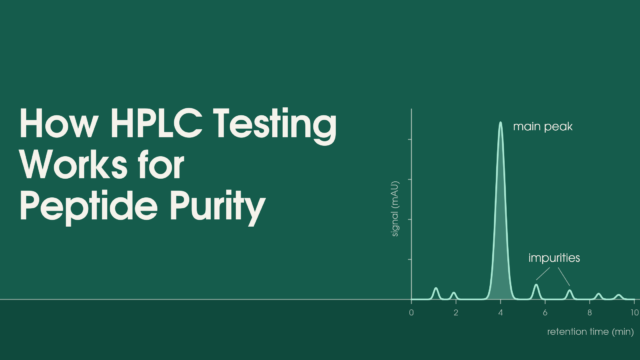
Most degradation is invisible. A peptide can lose 50% of its activity while the solution looks perfectly normal. The only definitive test is analytical — HPLC purity analysis of the solution compared to the original COA data. If the main peak has diminished or new impurity peaks have appeared, degradation has occurred. Short of analytical testing, the best indicators are loss of expected research activity and exceeding the recommended storage duration post-reconstitution (PubMed: Peptide degradation detection methods).
The Storage Hierarchy: A Practical Framework
From most stable to least stable, the hierarchy is clear. Lyophilized powder in sealed vials under inert gas at -20°C is the gold standard — stable for years. Lyophilized powder at 2-8°C is excellent — stable for months to years. Reconstituted solution at 2-8°C in amber vials with minimal headspace is acceptable — stable for 20-30 days. Reconstituted solution at room temperature is short-term only — measure in hours, not days. Reconstituted solution exposed to light, air, and repeated freeze-thaw is the worst case — degradation may be significant within hours to days.
The investment in proper storage — a dedicated refrigerator, amber vials or foil wrapping, bacteriostatic water, and single-use aliquoting for frozen storage — is negligible compared to the cost of the peptides being stored. Researchers who protect their compounds protect their research investment and their data quality.
Frequently Asked Questions
How long do reconstituted peptides last in the refrigerator?
Most reconstituted peptides maintain usable potency for 20-30 days at 2-8°C when reconstituted with bacteriostatic water. Exact stability varies by compound — peptides containing methionine or cysteine degrade faster due to oxidation sensitivity. After 30 days, consider the vial compromised unless analytical testing confirms potency.
Can I freeze reconstituted peptides to extend shelf life?
Freezing slows chemical degradation but introduces physical damage from ice crystal formation. If freezing, aliquot into single-use portions first to avoid repeated freeze-thaw cycles. Each freeze-thaw cycle introduces cumulative structural damage even when the chemical sequence remains intact.
Does light exposure really matter for peptide storage?
Yes. Multiple amino acids (tryptophan, tyrosine, phenylalanine, histidine, cysteine) are photosensitive. UV exposure generates free radicals that cause irreversible crosslinking, fragmentation, and oxidation. Store in amber vials or wrapped in foil, in a dark refrigerator.
Why use bacteriostatic water instead of sterile water?
Bacteriostatic water contains 0.9% benzyl alcohol, which prevents bacterial growth in multi-dose vials. Sterile water lacks preservative, so every needle entry introduces contamination risk. For multi-dose vials used over days to weeks, bacteriostatic water is essential for maintaining sterility.
PeptideQuill provides independent research news and analysis. This content is for informational purposes only and does not constitute medical advice.